Strike Detection Tips for Tenkara

Brown trout on a sakasa kebari

Today, I got an email asking a question I get so often, that I thought it was worthy of a blog post:  ”I’m using sakasa kebari and having a hard time telling when a fish takes my fly. How can I tell?”  The question came from an experienced western fly angler that knows how to read water and has no problem seeing the take with western style dry flies, but wants to use more traditional sakasa kebari and is struggling a bit with the transition.  When I switched to tenkara, I had the exact same problem so I can certainly empathize.  Like anything new, you eventually learn what works, what doesn’t, and how to translate your skills to a different method.  But especially those without a fly fishing background will hit the same roadblock so I thought it would be helpful to post a few tips on how detect strikes when using the tenkara method.

  Read More

Western vs. Tenkara Casting: The Grip

Tenkara Grip


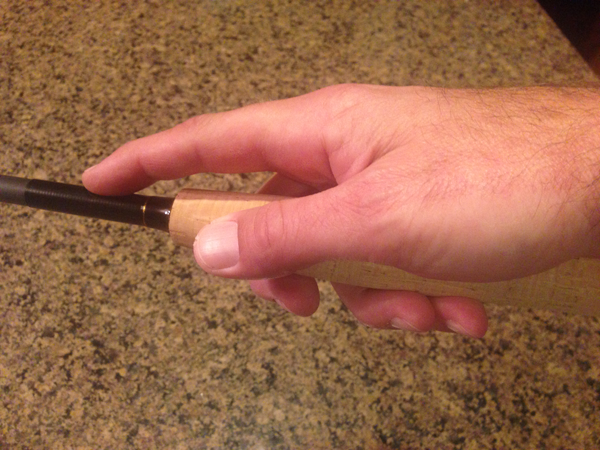
In a recent post, I wrote about how the path of the rod tip in tenkara differs from western casting.  In order to achieve the right angle, it’s important to use the right grip.  Western anglers coming to tenkara might be tempted to use the same grip they alway have with their thumb on top of the rod; however, this will make it difficult to cast a tenkara rod well.  Let’s look at the differences between the typical western grip and the tenkara grip and see why it’s so important to hold the rod a certain way to cast a tenkara rod.

  Read More

Western vs. Tenkara Casting: Different Strokes

western vs. tenkara fly casting

Western vs. tenkara fly casting - Graphic by Anthony Naples


A lot of people that come to tenkara are already western fly anglers familiar with the 10 O’clock/2 O’clock casting stroke.  While this may be a comfortable casting style, it doesn’t really translate well to tenkara and some wonder why they can’t cast a tenkara rod well with their normal casting style.  There are some fundamental differences between western and tenkara casting that one should be aware of in order to cast a tenkara rod well.  Let’s take a closer look at one of the most important.

  Read More

Understanding Tenkara Level Lines

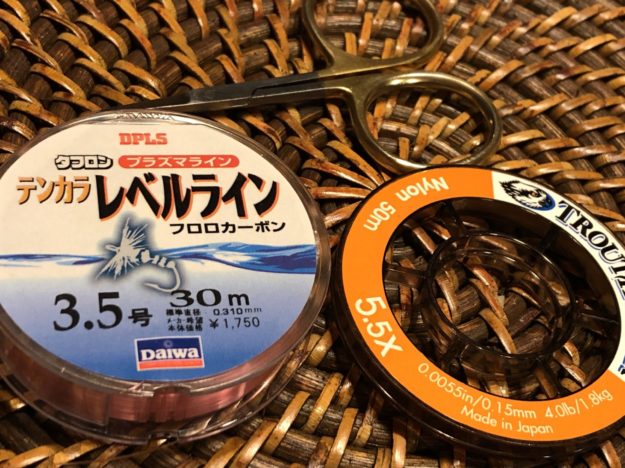
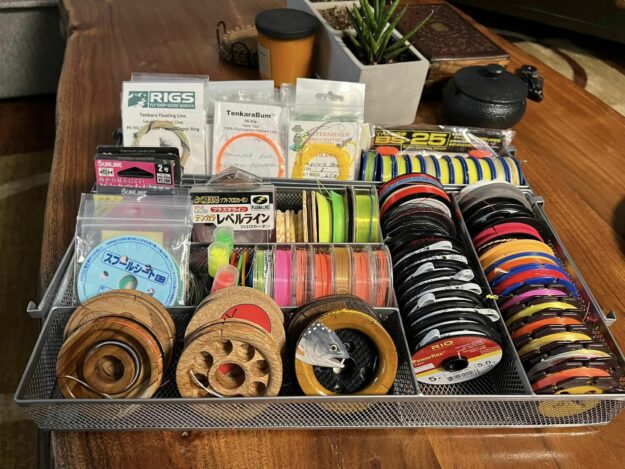
Tenkara Level Lines

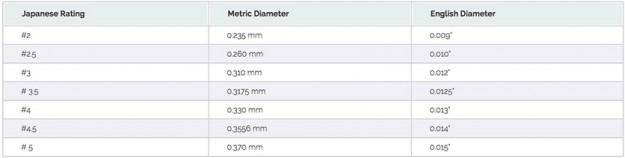
There seems to be a fair amount of confusion among tenkara newcomers when it comes to level lines. People talk about level lines in terms of “lb. test” or “breaking strength” and people don’t seem to get the rating system used in tenkara so I thought I’d make a post to clear it up and hopefully shed some light on this mysterious line rating system.

  Read More

A Tenkara Gear Checklist: What you Need and What you Don’t

If you’ve decided to get into tenkara fishing, you’re probably wondering what gear you need to get started.  The answer will be a little different for people who have fly fishing experience and already have some gear they can apply vs. people completely new to the sport who are starting from scratch.  But the good news is that in either case, you only need very little gear to start tenkara fishing.

In this post, I’m going to give you a simple checklist of the essentials you will need to start tenkara fly fishing, suggest some optional gear, and point out a few things that you don’t need (no matter what anyone tells you).


Required Tenkara Gear


Tenkara Rod

There are many choices now in tenkara rods and it’s beyond the scope of this post to go into a lengthy discussion about how to select the rod that’s right for you.  Fortunately, there are many forums and online resources where you can get great feedback to help you narrow it down.  Ideally, you would buy a few different rods to cover different situations.  But if you’re just breaking into tenkara, you probably want to start with just one rod.

Tenkara Fly Rods

Tenkara Fly Rods


In this case, I’d go for the most versatile action and length (you can always get other rods for more specific applications later).  If you’re already a western fly angler, I’d suggest the Tenkara USA Iwana 12′ because it has a stiffer action that tends to resonate more with anglers who are used to the comparatively faster actions of western fly rods.  If you’ve never fly fished a day in your life, I’d suggest the Tenkara USA Ayu.  It’s a 13′ rod with a softer action that is a little easier to cast for beginners.

Both are great rods and are versatile enough to work in a wide variety of situations.  The best thing to do is to post the types of fish and fishing conditions you’ll be facing most in the Tenkara USA forums and get some feedback from the tenkara anglers there on which rod will work for you.


Tenkara Line

There are two popular types of tenkara lines:  furled and level.  To get started, you really only need one line but it’s probably not a bad idea to buy two or three just in case you lose or break one (or two).  Both types have their advantages and disadvantages.  For a more detailed exploration of which line might be best for you, check out my article, “How to Choose a Tenkara Line”.

Tenkara Fly Lines

Tenkara lines


Tippet Material

Tippet is the thin monofilament that connects the tenkara line to your fly.  There isn’t any special tippet specific to tenkara so if you’ve already got some, whatever brand you have will work.  If you need to get some, the maximum size recommended for use with tenkara rods is 5X (anything heavier could break the tip of the rod on a snag, hard hook set, or large fish).  I recommend getting three spools of tippet:  5X, 6X, and 7X.  You’ll probably end up using 5X and 6X most of the time but it’s nice to have the option of using the smaller diameter 7X on spooky fish with tiny flies if you have to.


Tippet for Tenkara

Tippet for Tenkara


Line Clipper

You’ll need a good line clipper (also called a “nipper”) to cut off the excess tippet material from the knot you used to tie on your fly.  They’re cheap and very convenient.  Some fish will even refuse an artificial fly if they see the tag end of a knot hanging off a fly and so I consider this a necessary piece of gear.

Line Clippers

Line Clippers


Flies & Fly Box

Of course, you’ll need flies to catch the fish and something to keep them in.  Again, a discussion of which patterns to stock is beyond this post.  Check at your local fly shop for the most productive patterns in your area for each season.  As for what to carry them in, a simple plastic compartment box is all you need to get started.  Many tenkara anglers (including me) usually only carry one box with a few patterns and that’s all you really need to get started.  If you’ve already got flies that you have confidence in, those will work for tenkara fishing too.

Tenkara Flies & Fly Box

Tenkara Flies and Fly Box


Hemostats

Hemostats (or, “forceps”) are an invaluable tool.  They are most useful to remove the hook from the fish’s mouth but can also be used to smash down the barbs on hooks causing less damage to the fish (or you if you accidentally hook yourself).  I always encourage the use of barbless hooks.  It’s an old wives’ tale that you lose fish on barbless hooks.  In fact, I think you actually land more fish because you get a better hook set without the added resistance of the barb.  I have been fishing barbless hooks for 20 years and don’t feel I’ve ever lost a fish because of it.  It easier on you, on the fish, and is just a best practice as a responsible angler.

Hemostats

Some short and long hemostats


Optional Tenkara Gear


Tenkara Net

You don’t really need a net but I have had plenty of occasions where I was glad I had one.  You can land a fish by hand but a net is kind of an insurance policy against losing a fish at the critical moment when you grab the line to pull it in.  A well-designed net is also more fish friendly with fine mesh that won’t damage gills and fins before release.  For more about tenkara nets, read my article, “Nets for Tenkara Fishing”.


Tenkara Net

Tenkara USA Net


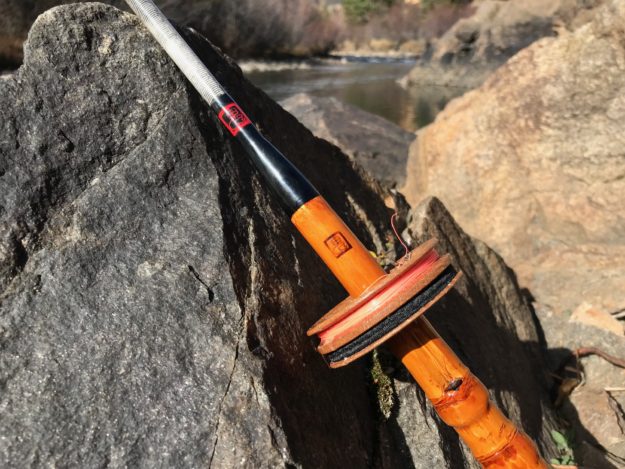
Tenkara Line Spool

Line spools are not necessary but are a nice convenience.  The main reason you might want to have a line spool is that it’s the perfect place to store your line after you collapse the telescopic tenkara rod (especially if you need to move from place to place).  You could just coil it up with your hand and stick it in your pocket but this often leads to tangles.  The spool eliminates this.

Another advantage is that you can have your tenkara line completely rigged up with your tippet and fly stored on the spool.  When you’re ready to fish, just peel off the line, attach it to the rod and you’re ready to fish.  This significantly cuts down on rigging time and lets you start fishing faster.

Tenkara Line Spool

Tenkara Bum Line Spool


Fly Floatant

Fly floatant is a paste (usually silicone based) that helps waterproof flies to help them float better.  Some people denounce using it because of environmental concerns but it does make a difference in helping your flies float.  I’ll leave it up to you to decide if you think using floatant is a good idea or not.  As an alternative, you can just make a few false casts (casts in the air) to shake off the excess water from your flies and make them float better.

Fly Floatant

Fly Floatant


Strike Indicators and Split Shot

There are surely some purist tenkara anglers out there who would argue against me putting these under the “optional” category and who would say I should put them in the “gear you don’t need” category below, but let me explain.

First off, a strike indicator is a small, floating “bobber” that helps you detect when a fish strikes a sinking fly.  And split shot are small lead weights that help the fly sink.  This technique is highly effective and very popular in western fly fishing; however, purist tenkara anglers don’t use this method.  Instead, they use other techniques to make a fly sink when they want to.

The reason I listed this under the “optional” category is because there are certain situations where this might be the most effective technique and a significant number of western western anglers have carried it over into their tenkara fishing.  Personally, I do not use strike indicators or split shot when tenkara fishing.  The weight they add to the end of the line makes your cast sloppy and inaccurate.  I prefer to use the more traditional ways of getting a fly to sink if I have to, but again, that is something you have to decide for yourself. If you’re coming to tenkara with a fly fishing background and are accustomed to using strike indicators and shot, then you might try it for a while and then ween yourself off it.  If tenkara is your foray into fly fishing, I’d recommend trying it without them and seeing how it goes.


Strike Indicators and Split Shot

Split shot (left) and strike indicators (right)


Gear you Absolutely Don’t Need for Tenkara


A Reel

By now, you know that you don’t need a reel.  This is the greatest single cost  savings in tenkara.  With decent fly reels ranging anywhere from $100 to $500 these days, tenkara can instantly save you hundreds of dollars!


Fly Line

High-performance western fly lines range anywhere from $50 to $100 (or more) so this is another significant area of savings.  Plus you don’t have to buy line cleaning supplies to maintain it.


Backing

When you have a fly reel and western fly line, you need to add backing behind the line to fill up the spool and give you extra line if the fish runs.  Not with tenkara!  One less expense and several less knots to learn!

Vest

Since you don’t need a lot of gear with tenkara, a vest isn’t necessary.  My vest cost $200 and I never wear it anymore.  I just carry a small pack around my neck with one fly box, a few tenkara lines and some tippet.


A Bunch of Gadgets

As I mentioned above, without a western fly line and backing, you won’t need special knot tying tools.  In tenkara, all the necessary knots can be tied by hand.  Other than hemostats, you won’t need any fancy gadgets to start tenkara.


Wrapping it up..


While this isn’t a full treatise on everything tenkara, it’s a good place to start and if you follow this short guide, you will have the gear you need to start catching fish right away with tenkara.  Notice I emphasized the word “gear”.  Gear is only part of the equation.  In tenkara you utilize less gear and focus more on skill.  So while the above is a good guide for the tools you’ll need, you still need to learn how to use them.  You can’t hand a novice the perfect bow and arrow and expect them to hit the bull’s eye (or even the target) right off the bat.  It takes practice.  But luckily, the learning curve is short in tenkara and with the right tools, you will “hit the target” with a lot less frustration (and money) than you would in western fly fishing.

  Read More

A Beginner’s Guide to Tying Tenkara Flies

fly tying kit

One of the questions I get asked most often is what one needs to start tying tenkara flies. The first thing I tell people is to NOT buy a fly tying kit. Kits are a perfect waste of money with just the right combination of wrong-sized feathers, useless colors of materials, and unnecessary tools. While they are marketed as money savers, they actually waste your money by making you buy things you’ll never use and end up spending more to supplement what the kit lacks.

Instead of buying a kit, it’s better target the fly patterns you want to tie, and buy the materials just for those.  I have put together this small guide on what you’ll need to get started without spending a lot of money and buying things you don’t need.

Getting Started…

If you’re thinking about learning to tie your own flies, tenkara fly patterns are a great place to start. Like tenkara fishing itself, tenkara flies are simple, practical, and easy to learn. It’s a great way to learn the basics of fly tying before moving on to more complicate Western fly patterns.

Unlike Western flies, you don’t need a lot of materials, tools or advanced skills to tie tenkara flies, which means you’ll be able to start tying your own flies right away with little upfront investment.

In this article, I will cover:

  • The basic types of tenkara Flies
  • The tools & materials you’ll need to get started
  • How to tie two of the most popular tenkara fly styles


Types of tenkara Flies


While there are many different types of tenkara flies, there are three styles that are the most popular and the most iconic of tenkara fishing. One is a dry fly (a fly that floats) one is a wet fly (a fly that sinks) and one is all purpose (a fly that can either sink or float depending on how you fish it.

The main difference between wet and dry flies is that the hackle on dry flies must be stiffer to help the fly float (whereas with wet flies, you want softer hackles that absorb water to help the fly sink and which will move more in the water to give the illusion of life).


 Tenkara Dry Flies

Black Sakasa Gujo

Black Sakasa Gujo Dry Fly


Most tenkara dry flies are Spartan, and lack the wings, tails, and legs of their Western cousins. They are more impressionistic than realistic and work more because of good presentation rather than imitation.

Tenkara Wet Flies

Sakasa Kebari Black

A basic Sakasa Kebari Wet Fly

Probably the most recognizable symbol of tenkara fishing is the Sakasa Kebari (reverse hackle fly). These flies are often made from nothing more than a hook, some thread and hackle (a feather wrapped around the hook). Unlike Western wet flies where the hackle is wrapped so that it faces back toward the hook bend, the hackle on a Sakasa Kebari faces forward, hence the name “reverse hackle”.

These flies are often fished by letting them sink, and then twitching the rod tip to make the hackle fibers open and close, which makes the fly look alive. In Japan, they are often tied on larger hooks (#12, #10, or #8), but can be tied is smaller sizes too (#14, #16, #18). We’ll talk a little more about hook sizes later.


Tenkara All Purpose Flies

Dr. Ishigaki Fly

The famous Dr. Ishigaki fly

The most famous tenkara fly is the Dr. Ishigaki fly which is literally nothing more than a black thread body with brown hackle. It can be fished both a dry fly and a wet fly, though its construction is more similar to most tenkara dry flies.  Some tenkara fishers only use one fly pattern, often, one that can be fished both wet and dry. Dr. Ishigaki himself usually fishes this pattern as a wet fly though.


Tools & Materials for Tenkara Flies


There aren’t really any special tools specific to tying tenkara flies. The same tools used for tying Western flies are all you need. But because the patterns are so simple, you won’t need as many tools to get started as if you were tying Western flies. Here is a list of basic tools you’ll need and some that are recommended:


Essential Tools

1. Fly Tying Vise

Fly Tying Vise

My venerable Dyna-King fly tying vise

The vise holds your fly so you can tie the fly. You may have heard of some people tying flies without a vise and just holding the hook in their hand. This is very difficult and I wouldn’t recommend it for a beginning tier. Trust me, you need a vice.

The vise will be your most expensive upfront investment but it will last you years and will easily pay for itself with the money you save from not having to buy flies.

There are a lot of good vises out there and a lot of terrible ones. Buy the best one you can afford. You can get a decent one for $40-$50. Look for one that has adjustable jaws to accommodate different hook sizes.


2. Bobbin

Fly Tying Bobbins

Various styles of fly tying bobbins

All flies are tied with thread and you need something o hold the thread under tension while you tie. That’s what the bobbin is for. I’d recommend a ceramic bobbin and they are more durable and won’t fray the thread over time.


3. Scissors

Fly Tying Scissors

Fly Tying Scissors


No, you can’t use the big, orange-handled scissors in your junk drawer. Well, you could, but life is a lot easier with real fly tying scissors. Ordinary scissors are too big and clumsy to work well for tying flies. Fly-tying specific scissors have thinner blades and finer points that will allow you to more effectively cut off excess material from your flies.


Optional Tools


1. Bodkin

Fly Tying Bodkins

Fly Tying Bodkins

The bodkin is a very useful and multipurpose tool. It’s essentially a needle with a handle. Its main use is to add head cement to you flies (glue that you put on the thread to keep the fly from coming apart). Many fly tiers do not use head cement at all. But if you do, you will need a bodkin to apply it. They’re cheap and you can even make one yourself by sticking a thicker sewing needle into a handle such as a wine cork or a wooden dowel.


2. Whip Finisher

Whip Finishers

Some different types of whip finishers

When you’ve finished your fly, this clever tool ties a special knot in the thread to prevent it from unraveling. It’s convenient, but certainly not necessary. There are other methods that you can use to finish your fly by hand such as using a series of half hitch knots. You can even make your own half hitch tool out a pen case:

I prefer a whip finisher because if your skin is rough, finishing the fly by hand can fray or break the thread and it is easier to finish off flies behind the reverse hackle which many tenkara fly patterns use. Plus, it just forms a neater looking knot.


3. Hackle Pliers

Hackle Pliers

Hackle Pliers

Hackle pliers are small clamps that hold your hackle and make it easier to wrap around the hook. Longer feathers can just be wrapped by hand. But with shorter feathers (the kind often used in tenkara wet flies) it’s nice to have hackle pliers. Look for ones that have a rubber coating inside the jaws. These grip the feather better and prevent it from slipping out of the pliers.


Tenkara Fly Tying Materials


Now that you’ve got your toolbox put together, you need to assemble you building materials. While there are literally thousands of different types and colors of fur, feathers, and synthetic materials, you can get started tying tenkara flies with an astonishingly small amount and still produce great looking flies that will catch fish.

Instead of buying all the materials you think you’ll need, a better strategy is to let the fly patterns drive your purchases. That is, pick out the pattern or patterns you want to tie, and just buy the materials for those. Then, figure out what pattern you want to tie next and just buy the materials you’ll need for that one. As you go, you’ll see that some of the materials you’ve already purchased can be applied to new patterns and that as you build your supply of materials, the less you’ll have to buy every time you want to tie a new pattern.

Covering the whole range of fly tying materials available is far beyond the scope of this article. Instead, I have put together a list of versatile materials that will allow you to tie a variety of traditional tenkara flies. You can always pick up new materials and experiment as you go.


1. Hooks

Hooks for Tenkara

Hooks for tenkara fly tying

There are basically 3 things you need to consider when buying hooks: size, shape, and weight.

Hook Size

As I mentioned above, many Japanese fly tiers use fairly large hooks. American anglers typically find smaller flies more effective. In general, I’d say that the most useful hook sizes are #12, #14, #16, and #18 (like thread, the higher the number, the smaller).

If you’re just starting out, you probably don’t want to buy a huge selection of hook sizes. And, the smaller the hook, the more difficult it is to tie on. I’d recommend starting out on a #14 hook because it’s big enough to make tying easier for a beginner, yet small enough to represent a variety of insects that fish will find appealing.

Hook Shape

Again, there are many different hook shapes that I can’t go into here, but we can narrow it down to two for the sake of simplicity: straight and curved. You’ll notice that many tenkara flies are tied on curved hooks but you can also tie them on straight hooks. I prefer curved just because they look “buggier” to me.

Hook Weight

Obviously, you’ll want your dry flies to float and your wet flies to sink, so this means you’ll need different weight hooks if you’re tying both. Dry fly hooks are thinner and lighter, while wet fly hooks are thicker and often have designations such as “1X heavy” or “2X heavy”.

Recommended Hooks

To begin with you only really need one size, shape and weight of hook. But as you go, you’ll eventually want to pick up different hooks as you gain more confidence in your tying skills and want to experiment more. When you do, here are my recommendations:

Tenkara Dry Fly Hooks

Straight: Tiemco 100

Curved: Tiemco 2457

Tenkara Wet Fly Hooks

Straight: Tiemco 3761

Curved: Tiemco 2457


2. Thread

Thread for Tenkara Tying

Thread for Tenkara Fly Tying

Many tenkara fly tiers use sewing thread. Since they’re often using thread to form the bodies of their flies, it makes sense to use this thicker thread to build up bulk quicker and easier. This is great for thread-bodied flies, but for flies that use other materials for bodies, I prefer thinner fly tying thread to avoid getting too bulky.

Fly tying thread comes in different thicknesses and has its own rating system. 6/0 is considered “standard” by many, while 8/0 and 12/0 are thinner. The higher the first number, the thinner the thread. So, for example, 3/0 thread would be very thick. 6/0 is probably the best all around choice as it’s thin enough to work well with different body materials, yet thick enough to build thread bodies without requiring a million wraps and giving you carpal tunnel syndrome.

There is a vast spectrum of thread color available, but you could get by with just one color: black. If you want the thread to match the color scheme of your pattern more, then you might want to get a few colors. You don’t have to get an exact match. A mixture of black, brown, and grey thread would cover most patterns.

If you do a Google image search for “tenkara flies”, you’ll see that many patterns use a contrasting thread color before the hackle behind the hook eye. This isn’t necessary and probably doesn’t affect the effectiveness of the fly, but it looks neat. To start, you could easily just use one color thread. But eventually, you might want to pick up some red, orange, or chartreuse thread to get a little more creative with your flies.


3. Hackle

I’ve already defined hackle as, “a feather you wrap around the hook”, but now it’s time to flesh that out a little as there are many different types of hackle with different qualities.


Dry Fly Hackle

Dry Fly Hackle

Dry Fly Hackle for Tenkara Flies

For dry flies, you’ll want stiffer hackle that will prop the fly up on the surface film of the water and help it float. Like hooks and thread, hackle also comes in different sizes. The hackle size is described the same as the hook size. So, for a #14 dry fly hook, you would use a #14 hackle.

Traditionally, tiers bought an entire “neck” (of a chicken) that had a wide variety of sizes. The tier had to go through a bunch of different feathers and use a gague on each one to find the right size.

Today, chickens are genetically engineered to produce more consistent, more useful, and less wasteful hackle. Whiting Farms takes the guesswork and expense out of finding the right hackle with their 100 packs. Each package contains only feathers of a specified size and is guaranteed to tie at least 100 flies making them a great value. Plus, the size of the hackle is consistent from the tip to the butt meaning you can use the entire feather. This is probably the most convenient and most economical choice for the beginning fly tier.

As for color choices, the most versatile are brown, grizzly, and dun (gray). Again, you can go crazy with color but I think these three will give you the most flexibility and allow you to tie a variety of dry flies without spending a lot of money.


Wet Fly Hackle

Tenkara Wet Fly Hackle

Speckled hen (left) and partridge hackle (right) for tenkara wet flies

Wet fly hackle is completely different from dry fly hackle and comes from different birds. There are many that can be used but probably the two most common are hen pheasant capes and partridge feathers.

Hen pheasant capes are relatively cheap and come in a variety of colors. More natural colors like browns and grays are probably the most versatile. The only problem is that the majority of useful feathers (in terms of size) tend to be limited.

Partridge feathers have nice patterns on them that just make flies look buggier. If you think you’ll be sticking with fly tying and want the most long-term economical source of wet hackle, it’s probably worth it to buy an entire partridge skin. This will not only give you a broad range of feather colors and variegations, but also a lifetime supply. I have been using the same partridge skin for years.


4. Peacock Herl

Peacock Herl

Peacock Herl

Peacock herl is a magical material that can be used on a variety or wet and dry flies. It can be used to form the entire body of the fly but in tenkara fly tying, is often wrapped just behind the hackle of wet flies. With it’s black and green iridescence, peacock herl is well known for it’s fish catching abilities.


Want to experiment a little more?


You could stop here and get started tying tenkara flies with a handful of the materials above. But if you want to take it a step further, read on…


Dubbing

Dubbing

Natural, synthetic, and blends of dubbing

Dubbing is basically chopped up fur or some synthetic material that you twist on to the thread, then wrap around the hook to form the body of the fly. As I mentioned above, many tenkara fly tiers simply use thread for the body. But if you want to try some different variations, dubbing is a good option.

There are too many natural and synthetic dubbings to cover here but it’s always safe to go with earth-tone colors like black, brown, olive, tan, etc. Start with one, learn the technique, and then you can begin to play with different colors.

I like to use dubbing on my wet flies because it absorbs water and helps the fly sink faster.


Wire

Fly Tying Wire

Fly Tying Wire

If you want to get a little fancier, you can buy a couple of spools of wire. Wire is wrapped around the bodies of wet flies to give them more durability, a segmented look (like a real insect), and add a little weight to help the fly sink. The traditional colors were gold, copper, and silver, but today, you can buy wire in almost any color, giving you a lot of room for creativity. Wire also gives your flies a little flash and seem to get the fish’s attention.


How to Tie Tenkara Flies


Now that we’ve gone through some types of tenkara flies and materials, let’s look at some examples of how they’re all put together. Keep in mind that these are just some examples to illustrate basic tenkara fly tying techniques. You could easily substitute materials and colors to produce a variety of different patterns.


The Dr. Ishigaki Fly (dry/wet fly)

Hook: Tiemco 100 #14

Body: Black 6/0 Uni Thread

Hackle: Brown Dry Fly #14


1. Start the thread behind the hook eye and cut off the excess.  Build a small head of thread about 1/4 of the way back to the hook point.


Dr. Ishigaki Fly Step 1


3. Tie in a brown hackle feather so the curved, dull side of the feather is facing the hook shank. Wrap the thread back toward the hook bend a few times. This is where you will later tie off the hackle.

Dr. Ishigaki Fly Step 2

4. Wrap the hackle 4-5 times around the hook back toward where you stopped the thread and tie off. You might accidentally trap some of the hackle with the thread but that’s OK. We’ll correct this in the next step.Cut off the excess hackle.

Dr. Ishigaki Fly Step 4

5. Grab the hackle fibers and sweep them forward over the hook eye. Make a few wraps of thread behind and over the hackle to lock them in a forward facing position.

Dr. Ishigaki Fly Step 5

6. Build a tapered body of thread along the hook. It should be thinner toward the bend of the hook and thicker closer to the hackle. Don’t make it too thick. Slimmer is better. Return the thread to just behind the hackle.

Dr. Ishigaki Fly Step 6

7. Us your whip finisher to finish the fly just behind the hackle. Four or five wraps with a whip finisher is all you need.

Dr. Ishigaki Fly Step 7

8. Cut off the excess thread close to the body and you’re done!

Dr. Ishigaki Fly Step 8

9. Your finished fly should look something like this. Don’t worry if it doesn’t look exactly like this. tenkara flies don’t place a lot of emphasis on precision and proportion. Even if your fly only remotely resembles this, it will still catch fish. Nice job!

Dr. Ishigaki Fly


Sakasa Kebari (wet fly)

Hook: Tiemco 2457 #12

Thread: Uni 6/0 (your choice of color)

Hackle: Hungarian Partridge


1. Start the thread just as we demonstrated above with the Dr. Ishigaki fly, clip off the excess, and build a small head of thread.

How to tie a sakasa kebari

2. Tie in one partridge feather by it’s tip so that the curve of the feather is facing the hook shank.

How to tie a sakasa kebari 2

3. Clip off the excess feather and wind the thread back toward the hook bend a little to give you room to warp the hackle. Here is an example where it’s handy to have hackle pliers. Partridge feathers are short and can be difficult to wrap by hand. If you have hackle pliers, grab the stem of the partridge hackle.

How to tie a sakasa kebari 2 5

4. Make three to four wraps of hackle back toward the hook bend to where you stopped the thread. Tie off the hackle and clip off the excess.

How to tie a sakasa kebari 3

5. Build a tapered body of thread and whip finish behind the hackle as we did in the example above of the Dr. Ishigaki fly.

Finished sakasa kebari

6. Trim off the excess thread. That’s it! Your fly should look something like the picture below. Don’t worry if it doesn’t look “perfect”. The effectiveness of this fly depends on the movement of the hackle in the water, not how well it’s tied.

Sakasa Kebari Black

Conclusion

Tenkara flies are the perfect flies to start learning fly tying. They will teach you the essential skills that you will need to tie more complex patterns later and are fun and easy to experiment with.

With the tools, materials, and techniques above, you will be able to start tying tenkara flies that will actually catch fish. I can’t think of anything more rewarding than catching a fish on a fly you tied yourself (you’ll see what I mean the first time you catch a fish on one of your own flies). Even though I have been fishing my own flies for over 20 years, I still feel a great sense of accomplishment on every single strike. I hope you will too–beyond the next 20 years.

  Read More

Why Every Beginner Fly Fisher Should Start with Tenkara

I headed over to my local fly shop today to pick up some hooks and there happened to be a fly fishing class going on.  While I was scouring the hook wall trying to find some #16s, I was eavesdropping, listening to what the instructor was saying.  And it was painful.

The “class” listened in a zombie-like stupor as the instructor spouted off all kinds of statistics, formulas, complex vocabulary, measurements, numbers, facts about gear, and philosophies.

When I turned around to check out, I could finally see their faces.  They looked somewhere between bored and intimidated.  It looked like a college lecture where half the students were daydreaming while the others were so afraid of failing, they were frantically writing down every word the professor said.

Then, I remembered how I gave my wife a Tenkara rod and she immediately caught three fish on her first try with absolutely zero fishing experience.

Tenkara Beginner

My wife with her first fish on a Tenkara Rod

I immediately thought, “this is no way to learn”.  Here these people are, in a class room setting being bombarded with technical information when they could be out on the stream catching fish right now!  And given the fact that they probably spent a lot of money to take the course, I actually felt bad for them.

Part of me wanted to sneak over there like a shady drug dealer, whip out a Tenkara rod and say, “Psst.  You want to catch fish?  I’ve got something right here that’ll catch fish”.

To me, everything about the situation was wrong.  Why would someone who wants to fly fish start with the most complicated and confusing method? And, why would they start in a classroom?  The stream is the best classroom.

Most of us who fish Tenkara today did it backwards.  We started the complicated way and then gradually discovered the beautiful simplicity of Tenkara. We probably didn’t have much choice in the matter since Tenkara wasn’t really around when we started.

But for today’s aspiring fly anglers, wouldn’t it make more sense to start with Tenkara, then learn the more complicated Western fly fishing style?

Instead of spending hundreds (or thousands) of dollars on technical classes and complicated gear and not catch anything, why not spend $150 on a Tenkara rod and start catching fish right away (and, actually have fun)?

I would gladly bet $100 that at least 50% of the people in the class I saw today will eventually give up on fly fishing.  They will be discouraged by the difficulty, cost, complexity, and lack of fish.  I have personally witnessed this phenomena countless times when I was an instructor. People tend to believe that if they spend enough money on instruction and gear, they will become successful anglers.  Then, reality hits them and they give up.

If I were still an instructor today, I would never put a Western rod in my students’ hands.  And I would never start them out in a classroom.  I’d hand them a Tenkara rod, head out to the stream, and make them fish.  I’d build their confidence and motivation early on by getting them to catch fish right away.  They can learn the technical stuff as they go.  But to develop a passion for the sport, it has to be fun and rewarding form the start.  If they wanted to progress (if that’s the right word) to Western fly fishing, fine.  But don’t extinguish the spark before it ignites!


Here’s a video of a group of beginners using both traditional and Tenkara fly fishing gear.  Which one looks easier?


Advice for Beginning Fly Fishers


If you’re thinking of taking up fly fishing, try Tenkara first.  Courses and complicated Western gear are expensive and frustrating.  Fly fishing should be enjoyable–not torture.

Most Astronauts are airplane pilots first.  They don’t just jump into the Space Shuttle cockpit.  They start by flying simpler aircraft and then learn the more complicated controls of a spacecraft.  While the stakes for running before you crawl are obviously a lot lower when it comes to fly fishing, the same logic applies.

Fly fishing is a wonderful and unique sport.  It can change your life and become a lifelong passion.  I wish I had known about Tenkara when I was learning to fly fish.  It would have had a dramatic impact on my learning curve (not to mention my stress level).  If you’re reading this, you obviously already do know about it.

Just ask yourself this question:  would you rather spend hours in a classroom learning technical jargon and the physics behind a cast or on the stream catching fish and having fun?

Do yourself a favor.  Try Tenkara first.  Catch fish.  Have fun.  Enjoy the sport.  You have no excuse.  :)


  Read More

Video: How to Connect a level Line to your Tenkara Rod

In my last post, I wrote about how to choose a tenkara fly line.  Many people had questions about how to attach a level line to their Tenkara fly rods so I thought it would be helpful to post a quick video on it so here it is.  I hope this helps:


If you’re not using level lines, here is a video on how to connect a traditional furled Tenkara line to your rod.

  Read More

How to Choose a Tenkara Line

How to choose a tenkara line


As Tenkara continues to gain momentum is the U.S., the number of choices in gear seems to have multiplied overnight.  In particular, many new line makers have appeared giving Tenkara anglers a wide range of choices in color, length, and tippet connection.

A common question many people new to the sport have is which line is best.  In this post, I’ll outline some of the pros and cons of different types of lines to help people make a more informed decision when choosing a Tenkara line.

Spoiler alert: The answer to the question above is that there is no “best” line.  The best line is the one that works for you!


Types of Tenkara Lines

There are basically two types of Tenkara lines that are available in the U.S.:  furled and level.  Some prefer furled, some prefer level, and some switch back and forth between the two depending on conditions.

There are other types of Tenkara lines used in Japan (such as titanium wire); however, since these are hard to come by in the U.S. I’ll stick to furled and level lines since those are what most of us have access to.


Furled Lines

Furled lines are often referred to as “traditional” lines since they are closer to the types of lines originally used in Tenkara fishing.  They are made by hand with a twisting process (that I won’t go into here) and are tapered like a standard Western fly-fishing leader.  They can be made out of many different materials including monofilament, thread, and horsehair.

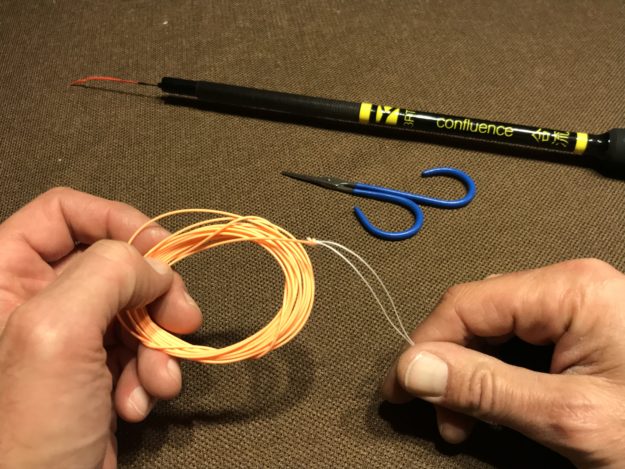
Furled lines usually have a large, Kevlar loop at the butt end, which is connected to the rod using a girth hitch knot.  At the tip end, there is either a loop (for a loop to loop connection to the tippet) or a small metal ring, which allows you to tie the tippet to the line using a clinch or Trilene knot.


Pros

  • Nice Turnover
  • Makes a delicate presentation
  • Very easy to attach and detach from the rod
  • Durable (I’ve had several lines last me years)


Cons

  • Creates spray when cast that could scare spooky fish
  • Becomes very twisted if you have to break off a fly from a snag
  • Depending on the material, it can sink easily and ruin dry fly presentations
  • The bulk of the taper means it may not cast as well in windy conditions


Level Lines

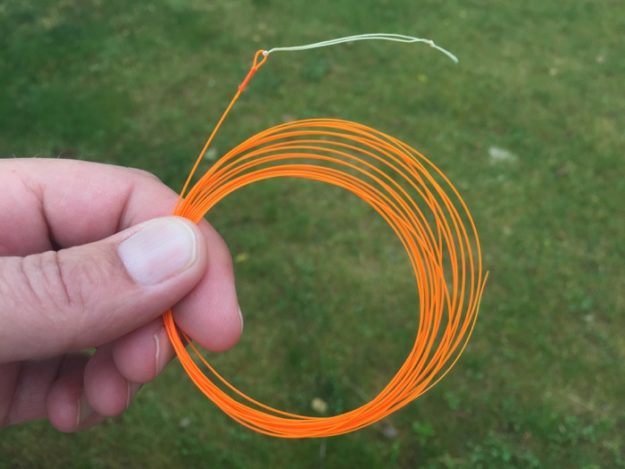
Unlike furled lines, level lines do not have a taper (as the name suggests).  They are usually nothing more than a length of straight fluorocarbon that you attach your tippet to.  It’s possible to make a level line out of monofilament, but most Tenkara pros will tell you that fluorocarbon turns over much better because it is denser than mono.


Pros

  • Can be cut to any length you need depending on conditions and technique
  • Very economical and can DIY
  • No line twist after pulling out snags
  • Lighter and thinner to reduce drag and keep more line off the water
  • Easier to cast in the wind


Cons

  • The knot used to connect it to the rod is a little more complicated than a furled line
  • Not as durable as a furled line
  • Can have line memory if wound on a spool too long
  • If you want to make your own, high-visibility fluorocarbon is difficult to find


Length Considerations

Once you’ve decided on which type of line to use, the next most important question is length.  Again, there is no one “best” length.  The right length will depend greatly on which technique you’re using and the conditions you face.  It’s probably best to be armed with a few different lengths so you can adapt to different situations.  Luckily, Tenkara lines (unlike Western fly lines) are relatively cheap so it’s easy to build up a good collection without breaking the bank.  Here are a few considerations:

  • A good rule of thumb for an all around length is that the line should be the same length as the rod or a little longer.  Don’t forget to factor in your tippet length as well.  For example, I usually use a 10.5 ft. line with a 12 ft. rod and about 2-3 feet of tippet.  This is a good all purpose length for most situations.
  • For lakes or streams where more reach or a more stealthy presentation is required, you might want to go with a longer line and more tippet.  So if you’re using a 13 or 14 ft. rod, you might have a 13-15 ft. line with a 4 or 5 ft. tippet.  Just keep in mind that a longer line and tippet might be more difficult to cast and may make it harder to land fish since you’ll have to pull more line in with your hand (forfeiting the tippet protection your rod offers).
  • There are times when a line that’s significantly shorter than the rod may be the best choice.  For example, if your Czech nymphing and want to keep all the line off the water, a 5 ft. line with 2-3 feet of tippet on a 13 ft. rod might work best, allowing you to keep the line perpendicular to the water while following the flow with your rod to create a drag-free presentation.


Color Considerations

Since I mostly fish dry flies, I don’t care too much about colors because I’m watching the fly, not the line.  But many Tenkara anglers who nymph or use wet flies prefer high-visibility lines so they can more easily detect strikes.  Luckily, there are a variety of choices in color today.

Again, color is dependent on your situation.  A clear line will not be visible if there is a lot of glare coming off the water’s surface.  Likewise, a dark line won’t be very visible if you’re in the shade on dark water.  If you need to see your line, you might consider carrying a few different colors and change based on the light and water conditions.

In my opinion, color is less important than length.  I usually prefer more neutral, stealthy colors but certain techniques might dictate the need for a more visible line.  It really comes down to personal style and preference, which is why you should probably try different colors to see what works best for you.


Conclusion

While there is no definitive answer on which Tenkara line is best, hopefully, this post gave you some things to think about before you buy your first or next line.  I won’t bias you with my personal favorites.  It’s more fun if you figure it out on your own.  Plus, I think experimentation and trial and error makes us better Tenkara anglers (and just better anglers in general).


Sources for Tenkara lines:


Which type of Tenkara line do you prefer and why?


  Read More

How Easy is Tenkara? Ask a Beginner!

Meet my wife.  Her name is Guadalupe.  She’s from Argentina.  She’s never fly fished before.  In fact, she’s never even fished a day in her life.  I took her out to the Roaring River below the alluvial fan in Rocky Mountain National Park, put a Tenkara USA Ayu in her hand and gave her some basic instructions.  In an hour, she landed 3 trout and missed two-not bad for someone who has never touched a fishing rod before (let alone a fly rod) and was put before some pretty tricky pocket water.

First Tenkara Trout

Within the hour, she became a pro and was stalking fish like a professional.

  Read More

How to Attach and Detach a Tenkara Fly Line

How to Attach and Detach Your Tenkara Fly Line from Jason Klass on Vimeo.

To a Western fly angler who is used to a nail knot or handshake connection (loop to loop) to connect their leader to their fly line, connecting a Tenkara fly line to the rod can seem a bit baffling.  Here’s a quick demonstration on how to connect a Tenkara fly line to your new Tenkara fly rod.

  Read More